
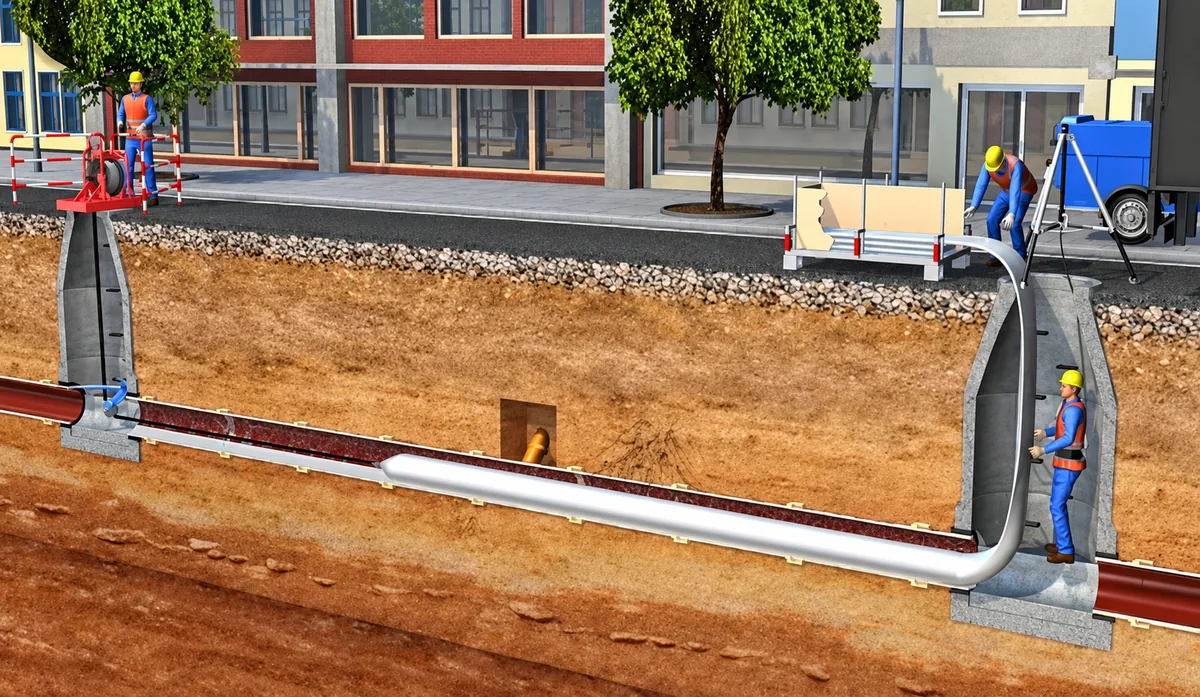
When an underground pipe is damaged, the first instinct is often to open the whole line and replace it. In most cases the damaged part is much shorter than the pipe, and the cheapest repair is the one that replaces only what is broken.
Step 1: find the exact place
CCTV inspection shows what is wrong inside the pipe, and the 512 Hz GPS transmitter on the camera marks the spot on the surface, up to 5 meters deep. The crew knows where to work, and whether digging is needed at all.
Option 1: the open method
The crew opens a pit at the marked point, removes the damaged piece and installs a new pipe, connected to the existing line. The before and after photos on the service page show exactly this kind of job.
Option 2: the closed (trenchless) method
Pipes can be replaced from manhole to manhole or from a building to a manhole without digging. The road, the yard and the infrastructure are not damaged.
Option 3: trenchless repair of damaged sections
Damaged sections of the network can be repaired without digging, using the sonation method.
How to choose
- Where the damage is and what lies above it: road, yard, building
- The pipe’s material, diameter and condition on the video
- The length of the damaged section
- Access: manholes and room for a working pit
Manholes, connections and new pipelines
Besides replacement, we build manholes, connect pipes and build new pipelines.
All from one team
GCT carries out the inspection, locating, HDPE welding and pipe replacement with one team, so the company that found the problem also restores the line.